

1120 NW 14th Street / Miami, FL 33136
ACDF in 2025: What Patients Should Know Before Cervical Spine Surgery
Dr. Shelby Burks
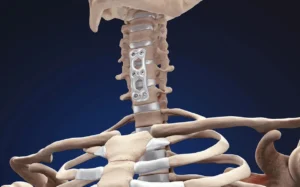 Neck pain has a way of creeping into everything. Sleep. Work. Driving. Even sitting still.
And for some patients, it doesn’t stop at pain. It becomes numbness. Weakness. Tingling in the arms or hands.
That’s usually when surgery enters the conversation.
ACDF — anterior cervical discectomy and fusion — has been around for decades. But how it’s done, how patients recover, and what expectations look like have changed a lot. Especially heading into 2025.
This guide breaks things down plainly. What ACDF actually is. How it’s different today. And what patients should realistically expect.
What ACDF Really Is (In Simple Terms)
ACDF is a surgery designed to take pressure off nerves or the spinal cord in the neck.
The problem usually comes from:
Neck pain has a way of creeping into everything. Sleep. Work. Driving. Even sitting still.
And for some patients, it doesn’t stop at pain. It becomes numbness. Weakness. Tingling in the arms or hands.
That’s usually when surgery enters the conversation.
ACDF — anterior cervical discectomy and fusion — has been around for decades. But how it’s done, how patients recover, and what expectations look like have changed a lot. Especially heading into 2025.
This guide breaks things down plainly. What ACDF actually is. How it’s different today. And what patients should realistically expect.
What ACDF Really Is (In Simple Terms)
ACDF is a surgery designed to take pressure off nerves or the spinal cord in the neck.
The problem usually comes from:
Neck pain has a way of creeping into everything. Sleep. Work. Driving. Even sitting still.
And for some patients, it doesn’t stop at pain. It becomes numbness. Weakness. Tingling in the arms or hands.
That’s usually when surgery enters the conversation.
ACDF — anterior cervical discectomy and fusion — has been around for decades. But how it’s done, how patients recover, and what expectations look like have changed a lot. Especially heading into 2025.
This guide breaks things down plainly. What ACDF actually is. How it’s different today. And what patients should realistically expect.
What ACDF Really Is (In Simple Terms)
ACDF is a surgery designed to take pressure off nerves or the spinal cord in the neck.
The problem usually comes from:
- A herniated disc
- Degenerative disc disease
- Bone spurs
- Cervical instability
- Better pre-operative imaging
- More precise surgical planning
- Improved implants and fixation devices
- Better pain control strategies
- Faster mobilization after surgery
- A small incision is made on the front of the neck
- Muscles and structures are gently moved aside (not cut)
- The damaged disc is removed
- Pressure is taken off the nerves or spinal cord
- A graft or spacer is placed
- The area is stabilized so fusion can occur
- Arm pain improves first
- Neck soreness fades gradually
- Strength returns over weeks to months
- Activity restrictions
- Gradual return to normal movement
- Physical therapy when appropriate
- Infection
- Bleeding
- Hoarseness or swallowing irritation (usually temporary)
- Non-fusion or delayed fusion
- Nerve irritation
- Non-surgical management
- Physical therapy
- Injections
- Motion-preserving alternatives, when appropriate
- Accurate diagnosis
- Proper patient selection
- Surgical precision
- Post-operative follow-through
- Review of imaging (MRI, CT, X-ray)
- Discussion of symptoms and progression
- Explanation of all available options
- Honest conversation about risks and benefits
- Clear expectations about recovery
- Understand what’s causing your symptoms
- Learn whether ACDF is appropriate
- Review all available treatment options
- Move forward with a clear plan